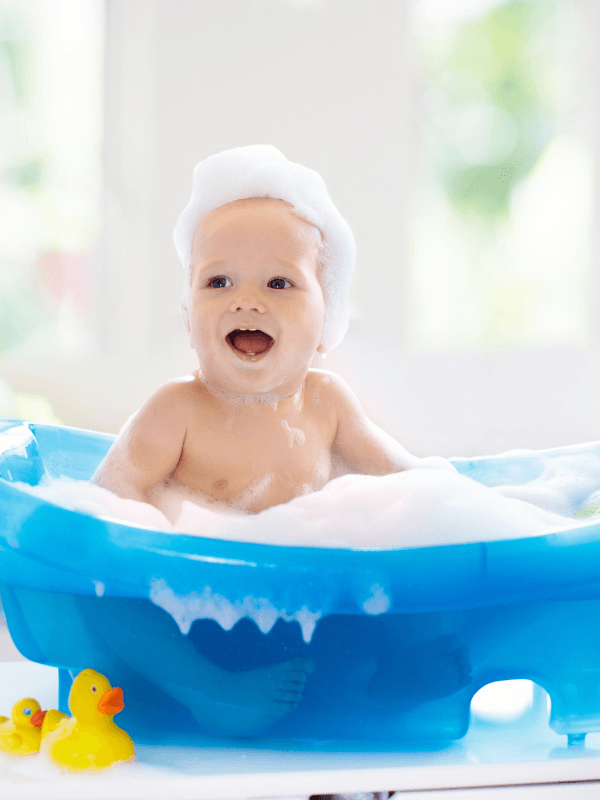


Bath time is chaotic. At least that’s how I remember it when my kids were little. Splashing, squirming, tears when the shampoo gets a little too close to their eyes…
That little “tear-free” label on the bottle probably isn’t something you think twice about. It’s just… what baby shampoo is supposed to be, right?
“Tear-free” is a marketing claim, not a safety certification. It describes how a product feels in the moment, not what’s actually in the bottle. And the chemistry that keeps a formula from stinging can happen in a couple of very different ways—one that’s genuinely gentle, and one that just tricks baby’s eyes into not noticing.
I’m going over:
- What does “tear-free shampoo” mean
- The ingredients that sometimes hide behind that claim
- The non-toxic baby shampoo formulas I recommend
What “Tear-Free” Actually Means, Chemically
To understand why some shampoos sting and others don’t, it helps to know what’s actually happening to your baby’s eyes in that split second of contact.
Human eyes sting when a liquid disrupts the eye’s natural protective tear film, and two factors mostly determine whether that happens:
pH
Skin has a slightly acidic pH (around 5.5), whereas eyes are closer to neutral (around 7). A shampoo formulated at the skin’s natural pH can feel perfectly gentle on the scalp and body, but sting the moment it touches the eyes. That’s why the best tear-free shampoo formulas are pH-balanced specifically for the eye.
Surfactant Types
This is the ingredient that actually creates lather and lifts away dirt and oil. Harsher surfactants aggressively strip the eye’s protective lipid layer, which triggers the instant sting-and-cry response. Milder, amphoteric surfactants clean just as effectively but interact with that protective layer far more gently.
My issue is that “tear-free” isn’t a regulated term. There’s no legal standard a brand has to meet before printing it on a label. So while some brands earn the claim through genuinely mild pH and surfactant choices, others get there a different way entirely.
Is tear-free shampoo actually bad for my baby’s eyes?
Not inherently, but some tear-free formulas use numbing agents to mask irritation rather than prevent it. The ingredient list matters more than the claim.
How Some Brands Fake Gentle Formulas
Not every “tear-free” bottle gets there the honest way. Because the term isn’t regulated, some brands lean on shortcuts that make a formula feel mild in the moment without actually being gentle underneath.
Numbing Agents
Some conventional formulas add mild anesthetic-like ingredients that dull the eye’s sting response rather than truly reducing irritation. Your baby’s eyes still get irritated—they just don’t feel it as intensely.
Sulfates
Sodium laureth sulfate (SLES) can still appear in “gentle” or “tear-free” formulas. It’s milder than SLS but still a known irritant and carries the risk of 1,4-dioxane contamination—a byproduct of the manufacturing process that the EPA has classified as a likely human carcinogen.
Fragrance
You know how I feel about hidden fragrances… The terms “fragrance” or “parfum” on a label can legally hide thousands of undisclosed chemicals, some of which are irritants themselves.
Formaldehyde-Releasing Preservatives
Ingredients like quaternium-15, DMDM hydantoin, or diazolidinyl urea slowly release small amounts of formaldehyde to kill bacteria in the bottle. This is a preservation method, but it is worth knowing given the development of skin and eyes.
What Gentle, Clean Formulas Look Like Instead
Once you know what to watch for, spotting a genuinely gentle formula gets a lot easier. The differences show up right there on the label.
Simpler Ingredients
Truly mild formulas often list 10–15 ingredients total. That’s it. When a formula doesn’t need to mask harshness or artificially extend shelf life, it simply doesn’t need as much stuff in it.
Plant-Derived, Amphoteric Surfactants
Instead of sulfates, clean formulas lean on cleansers that lather and clean effectively while being far gentler on the eye’s protective layer.
Look for:
- Decyl glucoside
- Coco-glucoside
- Sodium cocoyl isethionate
Naturally Soothing Add-Ins
Certain soothing ingredients show up in clean baby shampoo formulas because they genuinely support a baby’s skin barrier.
- Calendula
- Oat extract
- Chamomile
- Aloe
Preservation Via Safer Systems
Formaldehyde-releasing preservatives aren’t the only option for preservation. There are many clean, preservative-free, non-toxic baby shampoo brands on the market today—it’s just not the cheap option that mainstream brands are willing to invest in.
Gentle formulas often use alternatives such as leucidal liquid or radish root ferment to remain shelf-stable.
No Synthetic Fragrance
Many clean formulas skip “fragrance” entirely. I prefer fragrance-free baby shampoo formulas. Some clean brands use trace amounts of real essential oils instead, so you know exactly what’s creating that scent.
If you want to learn more about reading labels, join my course Toxin Free in 3.
My Go-To Tear-Free Baby Shampoo Picks
I always advocate for people learning how to read ingredient labels. It’s empowering to walk into Target and know what to look for
But I also know that sometimes, people just want to be told what the heck to buy!
So here are my non-toxic baby shampoo picks:
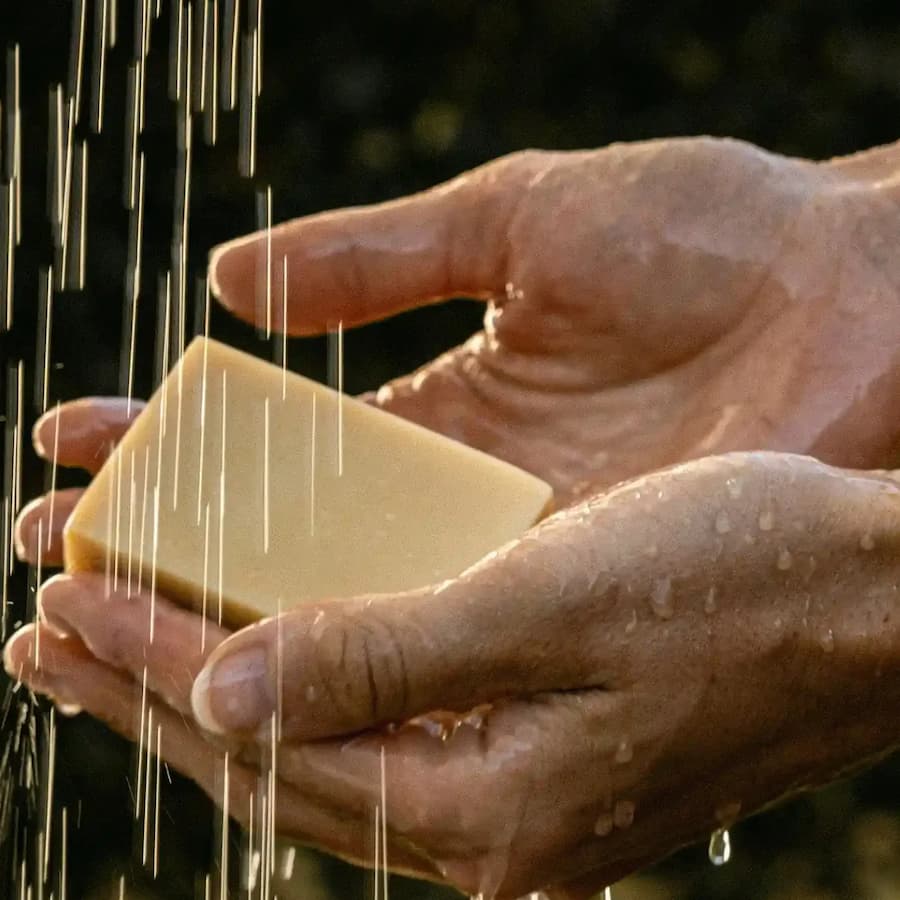
- Primally Pure Baby Bar (My fave) — Made with goat’s milk, organic coconut oil, shea butter and infused with calendula, chamomile and lavender to soothe baby’s skin. Use code WENDYKATHRYN and save 10%.
- Toups & Co Baby Wash — Don’t want a bar? This super-gentle baby body wash has only 4 ingredients and is as gentle and clean as you can find. Use code WENDY10 and save 10%.
- Pipette Shampoo & Body Wash — A clean Target option using plant-derived cleansers. It’s dermatologist-tested and smells so good.
- Attitude Unscented 2-in-1 — This is your fragrance-free choice with EWG-friendly ingredient sourcing
- Dr. Bronner’s Unscented Baby Castile Soap — Ultra-minimal ingredient deck with no synthetic preservatives or fragrances.
- Babo Botanicals Sensitive Baby — I wish I had this for my daughter when her eczema broke out. It’s designed specifically for sensitive and eczema-prone skin.
- California Baby Super Sensitive — No essential oils or fragrances at all because it’s designed for reactive skin.
Tear-Free Doesn’t Mean Worry-Free
“Tear-free” tells you how a shampoo feels as it goes on, not what’s actually in it. The only way to know if a formula is truly gentle is to flip the bottle over and read the ingredient list.
A short mental checklist is enough to shop with confidence. But if you’d rather skip the label-reading altogether, that’s exactly why I put together my Baby Bathtime shopping guide. Every product on it is one I’d actually put in my own kids’ bath.
Bookmark it, save this post, and let bath time go back to just being bath time.

+ show Comments
- Hide Comments