

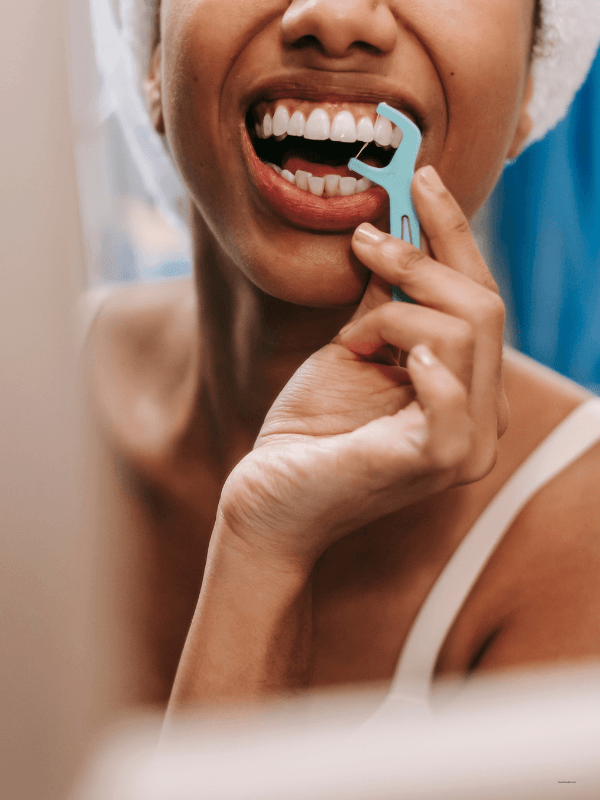


You’ve probably heard that flossing is non-negotiable. Dentists say it, hygienists remind you every six months, and most of us accept it as one of those small daily habits that we need to do.
But here’s what nobody mentions at your cleaning appointment: some of the most popular flosses on the market are coated in PFAS. The same class of synthetic chemicals is found in nonstick cookware, stain-resistant furniture, and fast food wrappers. The ones nicknamed “forever chemicals” don’t break down in the environment or in your body.
PFAS in dental floss isn’t uncommon, but this isn’t about spiraling or swearing off flossing—your gums still need you! It’s about making one small swap that removes a daily source of chemical exposure most people don’t even know they’re dealing with.
And honestly? Switching to PFAS-free dental floss is one of the easier swaps.
What Are PFAS and Why Should You Care?
PFAS are in more daily products than you think. That exposure is one of the main reasons why it’s becoming a mainstream issue people are talking about.
PFAS (Per- and polyfluoroalkyl substances) are chemicals that have been around since the 1940s. PFAS is an umbrella term that encompasses about 12,000 chemicals. All these chemicals have a carbon-fluorine bond in common. It’s the strongest bond in organic chemistry, which prevents PFAS from breaking down over time. That’s how they got their nickname “forever chemicals”: they literally don’t change.
Health concerns linked to PFAS exposure include:
- Hormone disruption
- Immune suppression
- Thyroid interference
- Links to certain cancers
Here’s how PFAS exposure through floss works: thin mucous membranes in the mouth absorb PFAS in dental floss quickly. When floss slides against gum tissue repeatedly, you’re exposing delicate gum tissue to PFAS over and over again.
Note: This is a cumulative exposure issue. One strand of floss won’t hurt you, but daily use over years adds up, which is exactly why a swap to PFAS-free dental floss makes sense.
What Studies Have Found About Floss and PFAS
PFAS is used in conventional floss products to create an ultra-slippery surface that easily slides between your teeth without shredding or snapping. It’s the same property that makes it useful in nonstick cookware.
In 2019, Silent Spring Institute conducted a study that found women who used Oral-B Glide floss had measurably higher PFAS levels in their blood. At the time, they were using a PFAS compound known as Teflon in their dental floss. Teflon-coated flosses are among the most common on the market.
The problem is that there ARE natural coatings that offer the same glide without PFAS. Candelilla, beeswax, and coconut oil are toxin-free alternatives that traditional dental floss companies aren’t using because PFAS is cheaper.
How to Read a Floss Label
I know label reading can be overwhelming for people. When you’re armed with the basic knowledge needed to quickly and effectively spot harmful ingredients, it can feel empowering.
Ingredients/materials to avoid:
- PTFE (polytetrafluoroethylene): This is Teflon—a direct PFAS red flag
- “Glide” in the name or description often signals a PFAS coating.
- Vague “coating” language with no material specified.
- Synthetic waxes without disclosure of source.
What to look for instead:
- Explicitly PFAS-free labeling
- Natural wax coatings: candelilla wax, beeswax, coconut oil
- Silk, bamboo, or corn-based fibers
- PFAS-free dental floss brands that publish third-party testing or ingredient transparency
When in doubt, if your floss glides suspiciously smoothly and the brand can’t tell you why, that’s your sign to swap.
PFAS-Free Dental Floss Brands Worth Using
As always, I’m happy to be your go-to resource for all things toxin-free. I personally vet every product that goes in my Toxin-Free Shopping Guide. I do all the research for you so you can confidently make toxin-free swaps.
These are the PFAS-free dental floss brands I’m using:
- Slate: I waited way too long to invest in Slate, but now I enjoy flossing! Use code WENDY10 for 10% off.
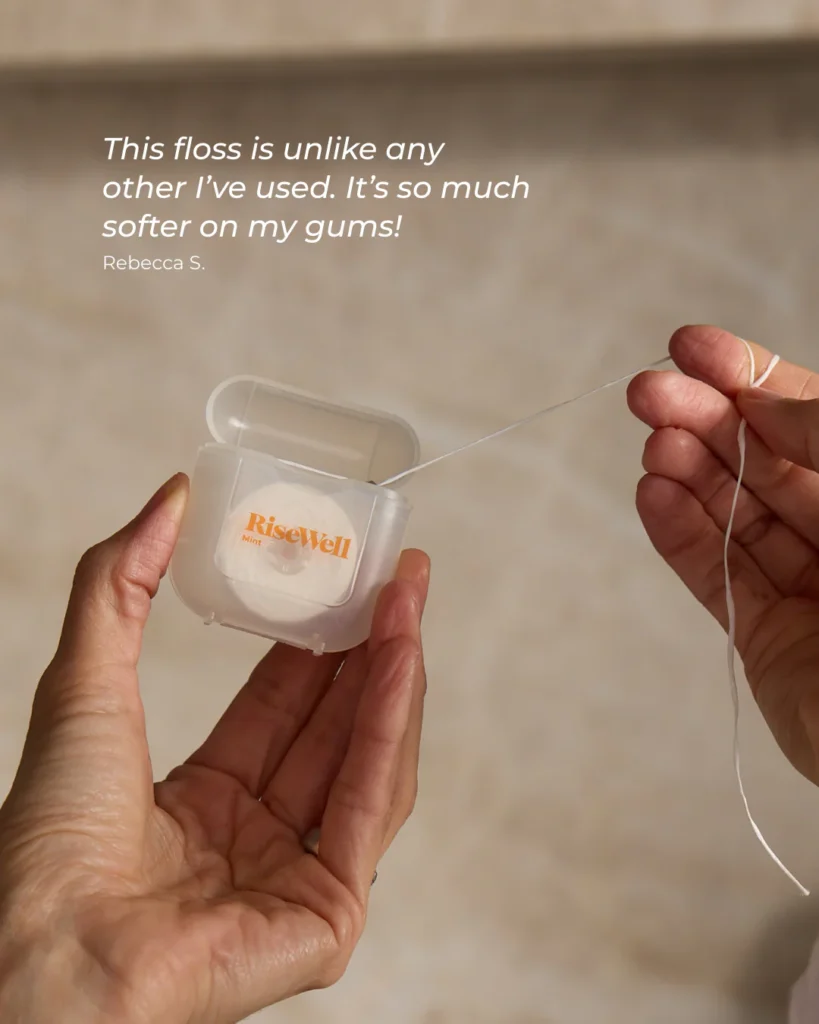
- Risewell: You know I love Risewell products, and their dental floss is no different. Use code WENDYKATHRYN10 for 10% off.
- Thieves: Another brand I constantly recommend, and that is all over my house, from cleaning products to essential oils.
While You’re at It: Other Dental Accessories Worth Swapping
Your mouth is a very sensitive area that absorbs a lot of what you put in it. Every dental product you use should be toxin-free to avoid chemicals being absorbed through your gums.
These are some other dental products that I recommend swapping.
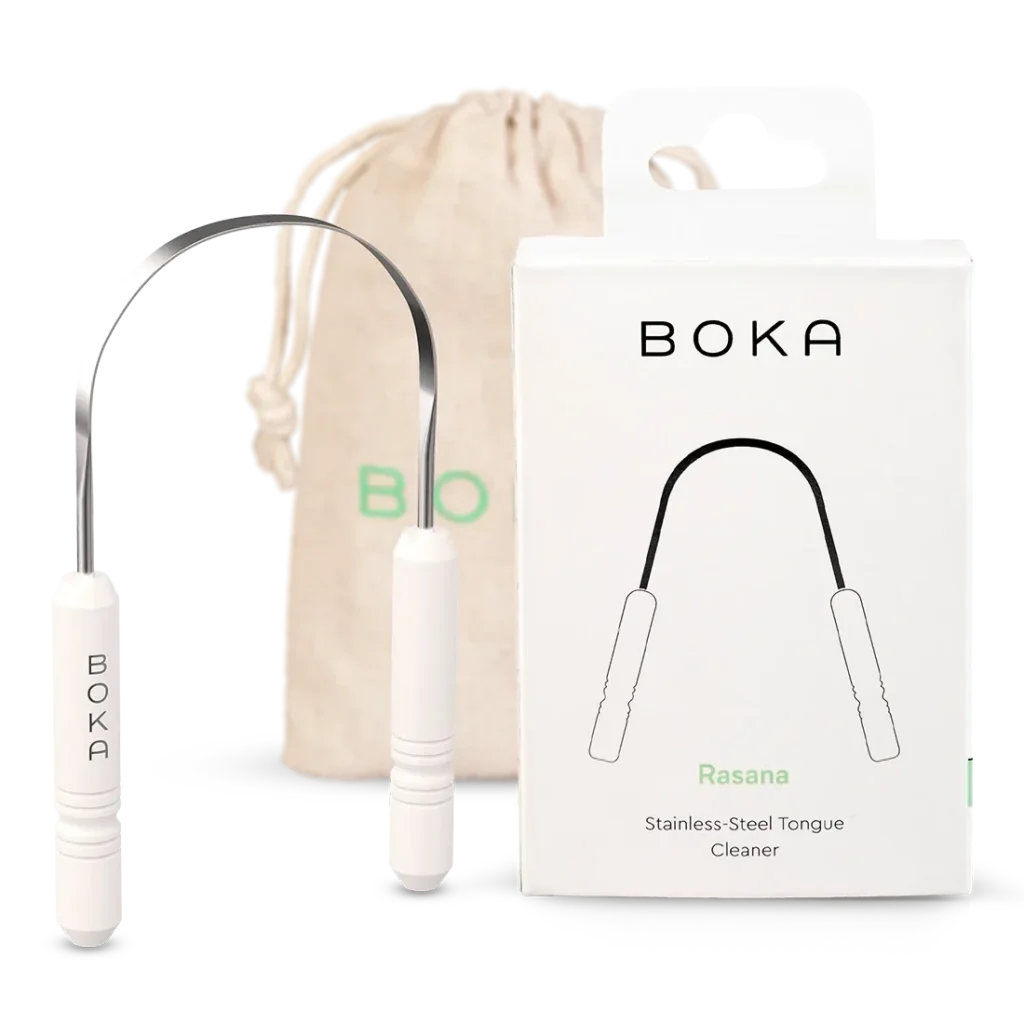
Tongue Scrapers
Most people skip this step entirely, but your tongue harbors more bacteria than any other part of your mouth. A simple stainless steel or copper scraper clears it without the alcohol, artificial dyes, or mystery ingredients hiding in conventional options.
My recommendations:
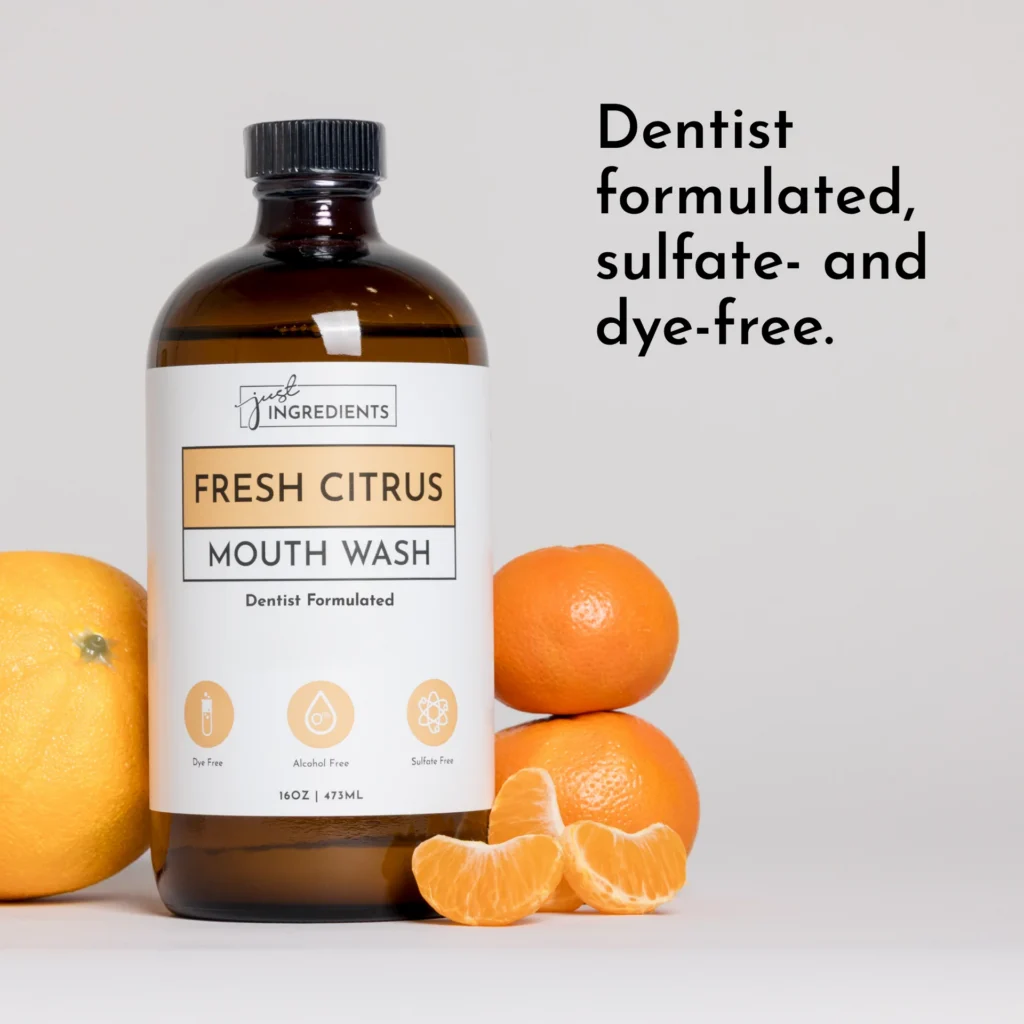
Mouthwash
Just because you spit it out doesn’t mean your body isn’t absorbing it. The thin tissues in your mouth are surprisingly efficient at pulling chemicals into the bloodstream, which makes an alcohol-free, microbiome-friendly rinse worth the swap.
My recommendations:
Teeth whitening
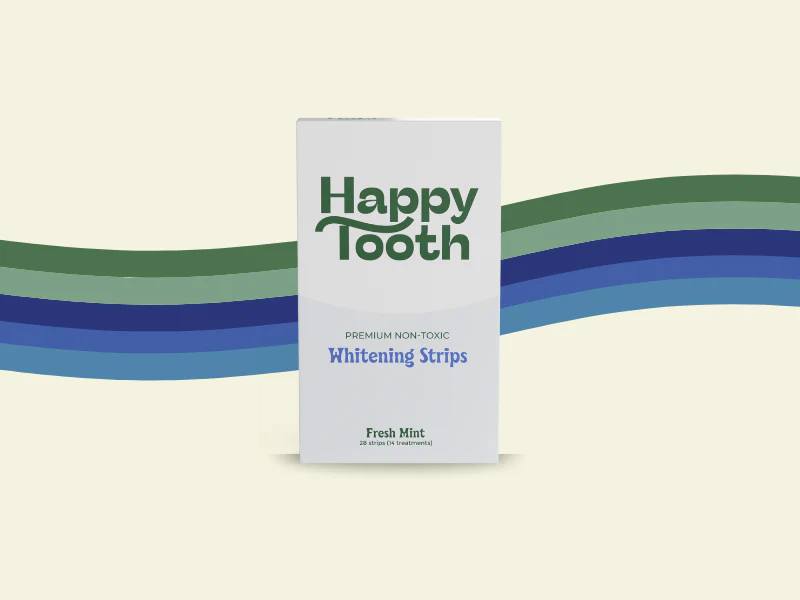
Conventional whitening products rely on harsh peroxides and chemical accelerants that can compromise enamel and irritate gums over time, so switching to a cleaner formula means you’re not sacrificing long-term oral health for short-term brightness.
My recommendations:
The Bigger Picture: Your Oral Microbiome
Most of us think about oral care in pretty narrow terms: clean teeth, fresh breath, no cavities. But your mouth actually hosts a complex ecosystem of bacteria, and the products you use every day either support or disrupt that balance.
PFAS-coated floss is one piece of that disruption, but floss isn’t the only conventional dental product working against you.
- Alcohol-based mouthwashes kill indiscriminately, taking out the beneficial bacteria alongside the bad.
- Harsh whitening treatments weaken enamel over time.
- Even the way you breathe affects your oral environment. Chronic mouth breathing dries out the oral cavity, shifts your pH, and creates conditions where harmful bacteria thrive.
Swapping to a floss that isn’t coated in forever chemicals, choosing a mouthwash that works with your microbiome instead of against it, and opting for gentler whitening are small individual decisions that add up to a meaningfully different daily environment for your mouth.
Your Floss Shouldn’t Be Working Against You
Small daily habits compound. Flossing is one of them, and it’s one of the easiest swaps in a low-tox routine.
I used to think PFAS-free floss was really hard to slide between my close-together teeth. It would break and get stuck. I found products that worked for my teeth, and you can, too.

+ show Comments
- Hide Comments