



Independent testing has repeatedly found that a surprising share of “extra virgin” olive oils on store shelves don’t actually meet the standard their labels claim to meet.
- Some are cut with cheaper refined oils.
- Some are mislabeled as to their origin.
- Some are just old and oxidized long before they reach your cart.
I don’t want you to feel like you’re doing anything wrong. This is about understanding how the olive oil industry actually works, so you can tell what’s really inside the bottle.
Once you know what real, high-quality olive oil is supposed to look like, taste like, and cost, it becomes a whole lot easier to tell real olive oil from the fake stuff.
What “Extra Virgin” Is Actually Supposed to Mean
Extra virgin olive oil (EVOO) is oil that’s been mechanically pressed from olives—no heat, no chemical solvents, nothing added to help the extraction along.
It also has to meet a low acidity threshold and be free of certain taste defects that signal the olives were damaged or over-fermented before pressing.
That processing method is what makes EVOO worth seeking out in the first place. Because there’s no heat or chemical extraction involved, the oil retains more of its natural polyphenols (anti-inflammatory, heart-healthy fats) and antioxidants. The gentler the process, the more of those benefits make it into your bottle.
Compare that to plain/pure/light “olive oil”, which is often a blend of refined oil (processed with heat or chemicals to strip out flaws) cut with a small amount of virgin oil for flavor. It’s not necessarily bad for you, but it’s a different product with a different nutritional profile.
So when a bottle says “extra virgin,” it’s making a specific promise:
- Minimally processed
- Chemically unaltered
- Made from good-quality olives
The problem is that a promise isn’t always kept.
How Olive Oil Fraud Actually Happens
Olive oil fraud is a well-documented pattern across the industry, with independent testing repeatedly catching it. This is about understanding how the mislabeling happens, so you know exactly what to look for on your own shelf.
A few of the most common tactics:
- Cutting with cheaper oils (sunflower, canola, soybean) mixed into “pure” EVOO
- Mislabeling origin — bottled in Italy ≠ grown in Italy.
- Oxidized/rancid oil relabeled as fresh — no harvest date, no freshness.
- Heat or chemical processing disguised as cold-pressed.
Why This Matters for Your Health and Kitchen
Real, fresh extra virgin olive oil is rich in polyphenols, the plant compounds responsible for its anti-inflammatory and antioxidant reputation. But polyphenol content degrades over time, and it degrades faster with heat, light, and oxidation.
So an oil that’s been cut with a cheaper, refined oil (or that’s just old and oxidized by the time it reaches your cart) delivers less of what you’re paying for.
There’s also the flip side: oxidized fats aren’t neutral. Rancid oil doesn’t just taste flat or off—it’s undergone a chemical breakdown that can produce compounds your body doesn’t benefit from in the same way.
It’s not something to panic over, but it’s a good reason to care about olive oil freshness the same way you’d care about it with meat or produce.
Your taste buds are actually a built-in detector. Real, high-polyphenol olive oil has a distinct peppery bite at the back of your throat. If your olive oil tastes flat, greasy, or like nothing at all, that’s usually a sign it’s either not fresh or not fully “extra virgin” to begin with.
How to Tell Real Olive Oil From the Fake Stuff
Look for:
- Harvest date on the bottle (not just “best by”)
- Single-origin / estate-grown, ideally with the farm named
- Dark glass or tin (protects from light degradation)
- Third-party testing for purity, polyphenols, or contaminants
- A peppery finish when you taste it (a real sign of polyphenol content)
Avoid:
- Vague sourcing (“blend of oils from Italy, Greece, Spain, Tunisia”)
- No harvest date on the bottle
Brands Already Doing the Verification for You
You don’t have to memorize a checklist and cross-reference every bottle at the store. Some brands have already done that work for you, building their entire reputation on getting this right from the very start.
My favorite cooking oils:
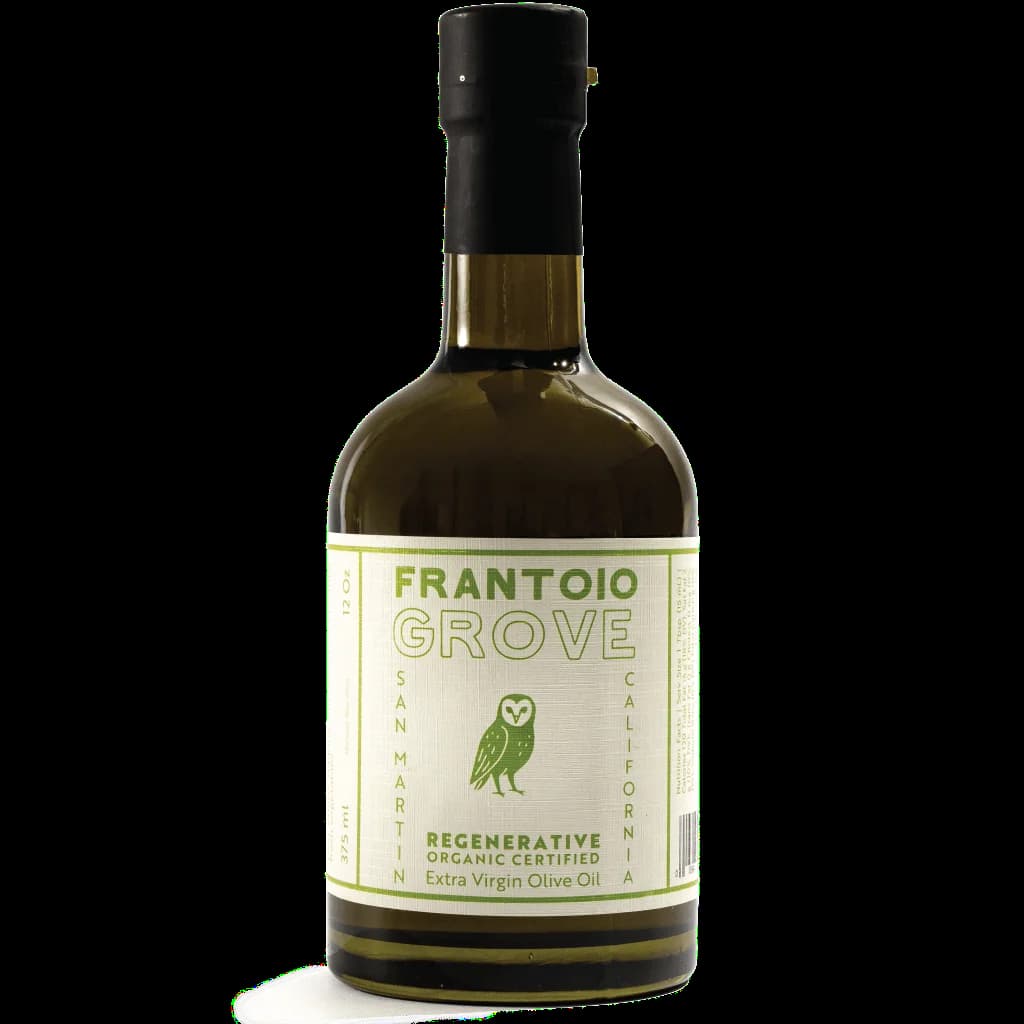
- Frantoio Grove EVOO (my fave!) — It’s true farm-to-bottle olive oil and is Regenerative Organic Certified. The olives are grown, harvested, milled, and bottled by the same family, using organic and regenerative practices that prioritize soil health and quality over yield.
- Yaya’s EVOO — 100% Koroneiki olives grown & cold-pressed the same day in family-owned groves in Sparta, Greece. Single-origin, certified organic.
- Kosterina — A single-origin, single-estate from Greece with early harvest and high polyphenol content, with the harvest date on the bottle.
- Jovial — Now regenerative, organic and certified glyphosate-free, this is a fantastic in-store option. Family-owned from Italy, vertically integrated sourcing.
Better Oil Is One Bottle Away
You don’t need to become an olive oil sommelier. The next time you’re reaching for a bottle, you now know what actually matters:
- A harvest date
- Clear sourcing
- A little peppery bite
And if you’d rather skip the label-reading altogether, that’s exactly what my cooking oil picks are for. These are brands I’ve already vetted, so you don’t have to.

+ show Comments
- Hide Comments