



If you’re working toward a less toxic kitchen, your cutting board is a good place to start. You’re using this surface almost every day to chop vegetables, slice fruit, prepare meat, and get dinner on the table. But have you ever stopped to consider what your cutting board might be leaving behind?
Plastic cutting boards are convenient and inexpensive, but every time you run a knife across the surface, you can create tiny grooves that release microplastic particles. Those particles can potentially end up in your food, and it’s one of the reasons I prefer wooden cutting boards. They’re durable, made from a natural material, and offer a simple way to reduce everyday plastic exposure.
Of course, switching to wood comes with a little extra responsibility. Unlike plastic, wooden cutting boards need proper cleaning, drying, and occasional conditioning to keep them in good shape. Here’s how to clean a wood cutting board so you can keep it ready for everyday use.
It’s Time to Toss The Plastic Cutting Boards
Think about how often you use a cutting board and how often your knife touches its surface. Every slice, chop, and dice can leave behind tiny scratches in plastic cutting boards, creating an opportunity for plastic particles to transfer to your food.
A 2023 study published in Environmental Science & Technology looked at cutting boards as a potential source of microplastic exposure. Researchers found that cutting on plastic boards can release microplastic particles. In other words, your meal prep could be contributing to your everyday microplastic exposure without you even realizing it.
If you’re looking to make more intentional choices about the materials that come into contact with your food, switching to wood is a reasonable place to start.
Here are a few reasons I prefer wooden cutting boards:
- No microplastic shedding every time I chop something.
- It will last for years.
- Wood is generally less abrasive on knife edges, helping keep them in better condition.
- Choosing an unfinished or appropriately food-safe finished wooden board reduces another source of plastic contact during food preparation.
What Does the Research Say About Wooden Cutting Boards and Bacteria?
Another reason to consider wooden cutting boards is their interaction with bacteria.
You might assume plastic is the more hygienic option because it’s nonporous, but research suggests the comparison isn’t quite that simple. A 1994 study published in the Journal of Food Protection found that wood absorbed some moisture-containing bacteria, pulling them away from the surface where they could be more easily detected. On plastic cutting boards, bacteria tended to stay on the surface longer, making them easier to detect even after some time had passed.
A 2025 study published in the Journal of Food Protection compared sugar maple cutting boards with high-density polyethylene (HDPE) plastic boards. Researchers found that E. coli detection on the maple boards decreased significantly after two hours, even without cleaning. The plastic boards had higher overall bacterial detection rates in the experiments.
Of course, this doesn’t mean wooden cutting boards are self-cleaning or that you can skip proper food safety practices. Other studies have found that bacteria can remain trapped in worn wood surfaces, too.
Regardless of which material you choose, washing, sanitizing when appropriate, and replacing heavily damaged boards are important.
What to Look for When Choosing a Wooden Cutting Board
The type of wood, construction, and finish can all make a difference in how durable your cutting board is and what materials come into contact with your food.
Here’s what to look for when choosing one:
- Choose solid hardwood: Look for options made from maple, walnut, cherry, or teak. These are popular hardwood choices for cutting boards.
- Look for minimal finishes: Choose boards finished with food-grade mineral oil or another appropriate food-contact finish.
- Consider the construction: Solid wood boards are different from laminated or composite boards. Check what adhesives and finishes are used if you’re trying to minimize unnecessary chemical exposures.
How to Clean a Wood Cutting Board After Each Use
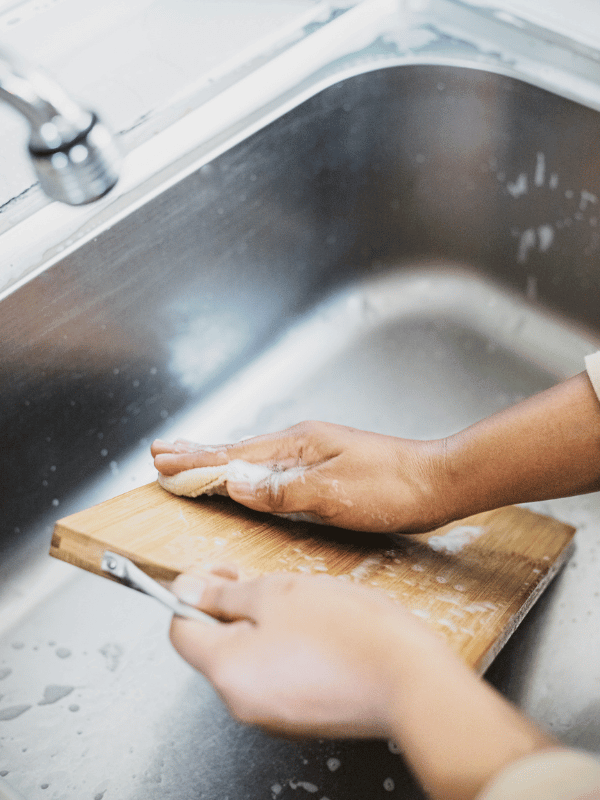
It’s basically the same as any other dish you would handwash, but you have to be careful not to damage the wood or leave behind excess moisture.
Here’s what to do after each use:
- Scrape away leftover food.
- Scrub both sides of the board with dish soap and warm water.
- Rinse soap and food residue.
- Wipe away excess water with a clean towel.
- Stand the board upright or position it so air can circulate around both sides.
Always allow it to dry completely before storing. Wood naturally absorbs moisture. Leaving your cutting board wet or storing it before it’s completely dry can contribute to warping, cracking, and microbial growth.
Can wood cutting boards go in the dishwasher?
No, I know it’s tempting to toss everything into the dishwasher after dinner, but the combination of high heat, prolonged water exposure, and detergents can cause the wood to split.
How to Naturally Deodorize a Wooden Cutting Board
Even with regular washing, wooden cutting boards can hold onto food odors and get stained. Here are a few options to refresh your wood cutting board.
Cleaning With Lemon and Salt
Sprinkle coarse salt over your cutting board and use half a lemon to scrub the surface. The salt provides gentle abrasion to help loosen food residue, and the lemon neutralizes odors. Rinse thoroughly with warm water.
Removing Stubborn Stains
For stubborn stains, make a paste with baking soda and a little water. Gently rub it over the stained area with a soft sponge, then rinse thoroughly. Baking soda offers mild abrasive cleaning that’s worked for me every time.
Deodorize With White Vinegar
If your cutting board still smells, apply a small amount of white vinegar to the surface, wipe with a clean cloth, and rinse with water.
Rinse and Dry Thoroughly
No matter which cleaning method you use, don’t skip this final step! Rinse away any remaining cleaning ingredients and moisture, then dry your cutting board with a clean towel. Stand it upright to allow air to circulate around both sides and prevent moisture from getting trapped in the wood.
How to Sanitize a Wooden Cutting Board
Cleaning and sanitizing aren’t the same thing! Cleaning removes food particles, grease, and everyday residue, while sanitizing reduces microorganisms on the surface.
This is especially important after preparing raw meat, poultry, or seafood. Washing with warm, soapy water is the first step, but you may need to sanitize your cutting board to reduce the risk of cross-contamination.
The USDA recommends using a diluted bleach solution to sanitize cutting boards after cleaning.
- Mixing 1 tablespoon of unscented liquid chlorine bleach with 1 gallon of water.
- Apply the solution to the surface.
- Allow it to sit for several minutes.
- Rinse thoroughly with clean water and let the board air-dry completely.
I personally don’t like using bleach, so I use 3% hydrogen peroxide instead. The University of Maine Cooperative Extension identifies it as a household sanitizing option for wooden cutting boards. After washing your board with soap and water, apply hydrogen peroxide, then rinse thoroughly with clean water and let the board air-dry completely.
How to Oil and Condition a Wooden Cutting Board
Wood naturally loses moisture over time. Without proper care, your cutting board can become dry, brittle, and more prone to cracking or splitting. Applying a food-safe conditioning oil helps replenish the wood and protect it from absorbing too much moisture.
Here’s how to oil your wood cutting board:
- Start with a clean, dry board. Wash your cutting board and allow it to dry completely before applying any oil. You don’t want to trap moisture underneath the finish.
- Apply food-grade mineral oil. Pour a small amount onto the surface and use a clean cloth to spread it evenly across the board. Don’t forget the sides and edges!
- Let the oil absorb. Allow the oil to soak into the wood for several hours or overnight.
- Wipe away excess oil. Use a dry cloth to remove any oil that hasn’t absorbed into the wood.
What Is the Best Oil for Wooden Cutting Boards?
Not all oils are suitable for conditioning a wooden cutting board, especially when the surface comes into regular contact with food.
Here are a few options to consider:
- Food-grade mineral oil
- Beeswax
- Board conditioners
I’d skip olive oil, vegetable oil, and other cooking oils for conditioning your cutting board. These oils can oxidize and become rancid over time, leaving your board with an unpleasant smell.
How often should you oil your cutting board?
How frequently you need to condition your cutting board depends on how often you use and wash it. A good starting point is once a month.
Here are some signs it’s ready for another coat:
- Dry wood
- Dull appearance
- Surface that quickly absorbs water
Regular conditioning extends the life of your wooden cutting board and keeps it in good shape.
A Little Care Goes a Long Way
Making your kitchen a little less toxic means being more intentional about the everyday items that come into contact with your food. Swapping a plastic cutting board for a wooden one reduces unnecessary plastic exposure.
Wooden cutting boards don’t require a ton of extra work, but a little preventative care goes a long way. With the right care, a quality wood cutting board can last for years. It’s a small kitchen swap that can make a difference without adding a whole lot of extra work to your routine.

+ show Comments
- Hide Comments