

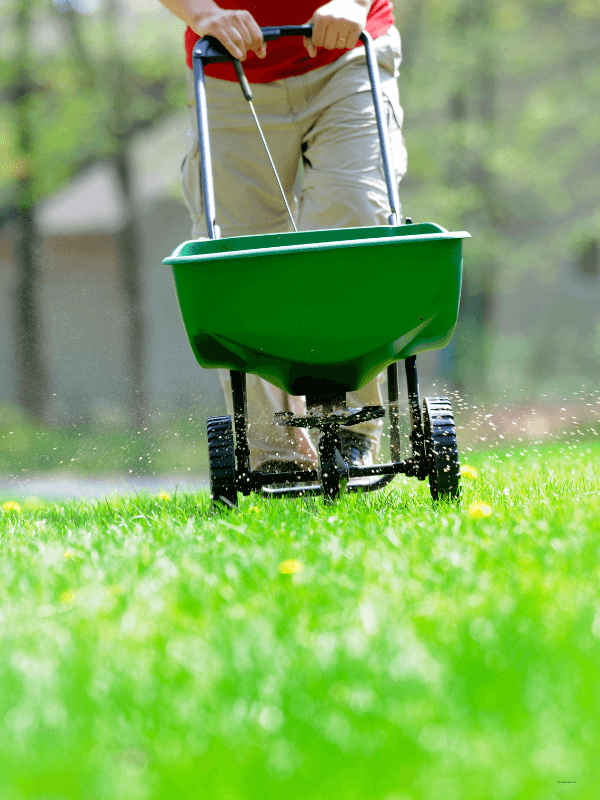


If you’ve ever let your dog out right after treating the lawn or watched your kids run barefoot through the grass an hour after spraying, you’re not alone.
Most people don’t think twice about conventional lawn care products. They’re at every hardware store, they work, and they’ve been around forever.
But what’s actually in them doesn’t stay outside. It lingers in the soil, tracks into your home, and washes into the waterways around your neighborhood.
The good news is there are non-toxic options that actually hold their own against weeds, and switching doesn’t have to mean sacrificing your yard.
What’s Actually in Conventional Lawn Care Products?
Conventional lawn care products are loaded with herbicides, pesticides, and synthetic fertilizers that don’t just stay on the grass. They linger in the soil, wash into waterways, and get tracked straight into your home on shoes, clothes, and paws.
And most people spray these things on their grass without thinking twice.
Here’s what you’re actually spraying on your lawn.
Glyphosate
Glyphosate is the active ingredient in Roundup and one of the most widely used herbicides worldwide. It works by blocking a specific enzyme pathway that plants need to grow, killing them from the inside out.
The problem is that the pathway also exists in soil microbes, which means repeated use degrades the microbial ecosystem your lawn actually depends on to stay healthy.
Beyond the soil, glyphosate has been classified as a probable human carcinogen by the World Health Organization, and studies have linked long-term exposure to a range of health concerns.
And it doesn’t just disappear after it dries. Glyphosate persists in soil, shows up in water runoff, and has been detected in food, air, and rain.
For something that gets sprayed on the ground where kids and pets spend their time, that’s a lot of unknowns that I’m not comfortable with.
Synthetic Herbicides and Pesticides
Synthetic herbicides and pesticides are chemical compounds designed to kill weeds, insects, fungi, whatever the target, and they’re formulated to be persistent enough to keep working long after application.
That persistence is the problem. These chemicals don’t stay where you put them. They bind to soil particles, wash into storm drains and waterways, and get carried indoors on shoes, paws, and clothing.
Many contain endocrine-disrupting compounds that interfere with hormone function in humans and animals, and several have been linked to neurological issues, reproductive harm, and increased cancer risk with repeated exposure. For pollinators like bees, even low-level contact can be fatal.
The conventional lawn care aisle is essentially a shelf full of products designed to withstand nature.
What to Look for in a Non-Toxic Lawn Care Product
Choosing non-toxic lawn care means avoiding chemicals like glyphosate and instead supporting healthier soil with organic fertilizers, natural weed control, and regenerative lawn practices. It’s a safer option for kids, pets, pollinators, and the ecosystem around your home.
Here are some non-toxic and eco-friendly lawn ingredient alternatives to look for:
- Pant-based actives
- Organic certifications
- Soil-safe formulas
Understanding Selective vs. Non-Selective Weed Killers
Not all weed killers work the same way. Using the wrong one in the wrong spot can take out your flowers right along with the dandelions.
Non-Selective Weed Killers
Non-selective weed killers are used for spot treatments like driveways, cracks, walkways, etc. They eliminate most plants they come in contact with, so apply carefully and only to the weeds you want to remove. If weeds persist, multiple applications might be needed to fully exhaust the roots.
My Non-Selective Weed Killer Recommendations:

Selective Weed Killers
Selective weed killers are used to treat lawns or larger garden areas, removing weeds without damaging surrounding desirable plants such as grass, flowers, and vegetables. They don’t always reach the roots, so weeds may regrow and require a few repeat applications.
My Selective Weed Killer Recommendations:
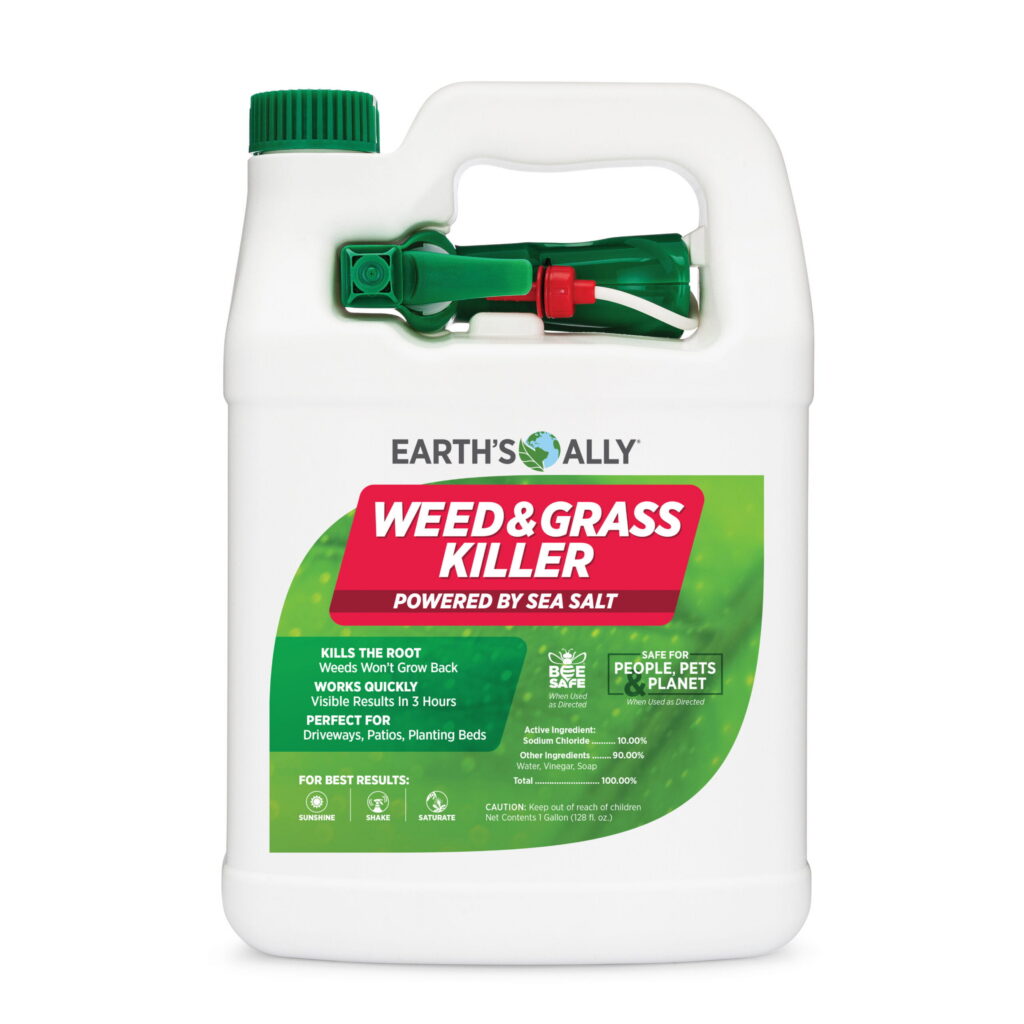
My Top Pick — Earth’s Ally
Earth’s Ally is my top pick because they’ve thought through the whole ecosystem of your yard. Instead of just one product, they offer solutions for weeds, pests, and plant care, all designed to work effectively while being a safer alternative to conventional lawn chemicals when used as directed.
DIY Weed Killers You Can Make at Home
Who doesn’t love a little DIY concoction? For an even more eco-friendly lawn alternative, create your own weed killer. I’m willing to bet you already have these ingredients at home.
But be careful when using these treatments, as they can harm nearby plants. They are great options for treating driveways, sidewalks, gravel, and cracks.
Vinegar Spray
- 1 gallon vinegar + 1 cup salt + 2 oz dish soap
- Mix directly in the vinegar jug, pour into a spray bottle.
- Spray directly on young weeds mid-day in full sun.
Salt Water Spray
- 3 parts water, 1 part salt — spray weeds directly
Boiling Water
- Pour directly on weeds; spray leaves thoroughly.
Rubbing Alcohol Spray
- 2 tbsp rubbing alcohol + 1 quart water
The Bigger Picture — Regenerative Lawn Practices
It’s not just about swapping products; it’s about supporting healthier soil and protecting the ecosystem around your home.
Regenerative lawn practices focus on building healthy soil first because healthy soil naturally crowds out weeds, retains moisture, and reduces your dependence on treatments over time.
That means:
- Leaning into organic fertilizers that feed the microbial life underground instead of depleting it.
- Overseeding bare patches so weeds have less room to take hold.
- Mowing high to shade out weed seeds before they get established.
- Accepting that a lawn with a few imperfections is a lawn that isn’t being kept alive with chemicals.
The goal is to have a yard that’s genuinely healthy, not just one that looks like it.
Better Products, Same Green Lawn
You don’t have to overhaul everything at once. Start with one swap — your driveway spray, your lawn fertilizer, whatever you reach for most. The products are out there, and they work. Your kids, pets, and pollinators will all be better for it.
Better is better, even when it’s just one bottle at a time.

+ show Comments
- Hide Comments