

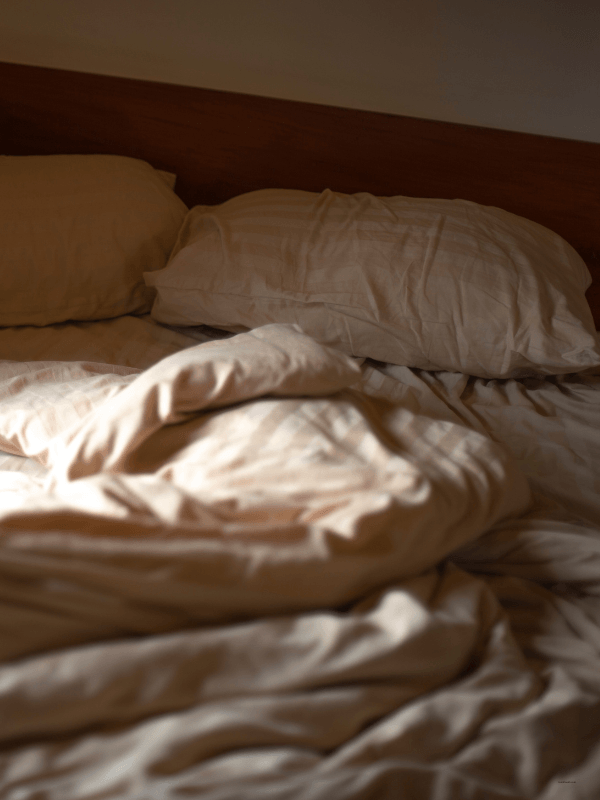


Ever wake up sweaty even though your bedroom is cool or it’s winter?
Polyester sheets may be part of the problem.
Many inexpensive sheets are made from synthetic materials, which can feel less breathable and may trap heat and moisture against your body.
If you’re looking for a cooler, more comfortable night’s sleep, switching your bedding material can be a simple place to start.
Why Synthetic Sheets Can Make You Feel Hot at Night
If you regularly wake up sweaty, kick the covers off in the middle of the night, or feel like your sheets are clinging to your skin, your bedding could be contributing to the problem.
Many sheets on the market are made with synthetic materials such as polyester and microfiber. These fabrics can be inexpensive, soft, and durable, but they don’t have the same breathability and moisture management as natural fibers.
What Are Synthetic Sheets?
Synthetic sheets are made from man-made fibers rather than natural materials. Polyester and microfiber are two of the most common examples, and you’ll often find them in budget-friendly sheet sets.
These materials aren’t inherently bad or toxic, but they can behave differently from natural fibers when you’re sleeping.
Your body naturally releases heat and moisture throughout the night. Instead of allowing heat to move away from your body as easily, synthetic fabrics create a warmer, less comfortable environment beneath the covers.
You probably already know this if you’re already a hot sleeper!
There’s an important distinction here: polyester sheets aren’t necessarily causing you to sweat. Your body regulates its temperature while you sleep, and many factors can affect how hot you feel.
However, the wrong bedding can make it harder to stay comfortable once you do start generating heat and moisture.
What to Look for When Shopping for New Sheets
Don’t let “cooling” marketing make the decision for you. These claims aren’t a substitute for looking at the actual materials used to make the sheets.
Switching away from polyester sheets is a great starting point, but there are a few other things to consider when you’re shopping for new bedding. The fiber itself matters, but so do the certifications, dyes, and finishing processes used to create the final product.
Natural Fibers
When choosing toxin-free bedding, prioritize natural fibers, such as:
- Organic cotton
- Linen
- Hemp
- Wool
These organic materials can offer breathability and moisture management while also giving you an alternative to polyester sheets.
Fiber choice is worth paying attention to because your bedding is in close contact with your skin for hours every night. Unlike a shirt you might wear for a few hours and toss in the laundry, your sheets, pillowcases, and blankets surround you for roughly a third of your day.
And I don’t know about you, but I’m not washing my sheets every day. That makes your bedding a worthwhile place to be intentional about the materials you bring into your home.
GOTS Certification
If you’re shopping for organic bedding, GOTS (Global Organic Textile Standard) certification can make it easier to identify products that meet established standards for organic fibers and processing.
Rather than relying solely on a label that says “organic,” look for recognizable third-party certifications that provide more information about how a textile was produced.
Looking for GOTS-certified bedding when shopping for sheets and other textiles is a simple way to narrow down your options and make a more informed choice.
Dyes and Finishing Processes
The fiber isn’t the only thing worth considering. Pay attention to how that fiber is dyed and finished, too.
Conventional textile manufacturing can involve chemicals used to color, soften, wrinkle-proof, shrink-proof, or otherwise alter fabric. Fibers go through multiple processing steps, including bleaching, dyeing, and finishing. Some of those chemicals can remain as residues on the finished textile or create environmental concerns during manufacturing.
Prioritize plant-based dyes when possible, with low-impact dyes as another option. Plant-based dyes are derived from natural sources such as:
- Roots
- Leaves
- Flowers
- Bark
These are an alternative to conventional synthetic dyes and, depending on the specific process, may have a different environmental footprint.
Think beyond the label on the front of the package—we all know you can’t really trust marketing labels. A sheet can start with a natural fiber, but the finished product involves additional processes that are worth understanding so you can make a choice that aligns with what matters most to you.
Do Plant-Dyes Have Healing Properties?
I want to tell you about something I experienced firsthand and why I think it represents the future of healthy textiles.
Most of us in the non-toxic world think about what we remove from our lives.
- Take out the PFAS.
- Swap out the synthetic fragrance.
- Ditch the pesticide-laden cotton.
And that is legit—reduction matters enormously.
But what if the textiles touching your skin every day could actively help you? Not just be less harmful. But actually work with your body to heal it?
That is the premise behind Aizome’s R&D company. This is not a marketing story. This is centuries of knowledge about what plants can do.
Here is what I can tell you: After 6 weeks of sleeping on Aizome’s blue indigo-dyed sheets two summers ago, my tinea versicolor (a skin condition I get every summer that leaves my skin spotted and is caused by an overgrowth of yeast) disappeared.
Here is what the science is showing: Plant dyes like indigo don’t just color fabric. They appear to have bioactive properties that interact with the skin’s microbiome. Specifically, research suggests they can selectively eliminate harmful bacteria while leaving beneficial bacteria intact. They show antifungal properties. And there is growing evidence they can improve inflammatory skin conditions like eczema.
Selectively. That word matters. We are not talking about a kill-everything approach like silver-lined textiles. We are talking about plant intelligence that distinguishes between what helps your body and what harms it.
The preliminary data was incredible!
We are applying for grants to conduct more formal medical research in a hospital setting to rigorously document what the plant dye world already understands intuitively. If we can prove in a clinical setting that these dyes reduce staph infections, improve eczema, and decrease fungal issues in patients, we are looking at a genuinely new frontier in what textiles can do for human health.
My Favorite Bedding Swaps
From organic cotton sheets to natural-fiber blankets and duvet covers, there are plenty of options for making a more thoughtful bedding swap.
These are some of my favorite brands for finding bedding made with natural materials and, in many cases, certifications that make it easier to understand how the products are made. Whether you’re looking for a simple sheet upgrade or want to rethink your entire sleep setup, there’s an option for every budget and starting point.
Aizome: My Top Pick
I’m absolutely obsessed with Aizome, so much so that I accepted a role as their Director of Legislative Affairs. I flew to Japan in 2026 to collaborate with their team on a very special project… The world’s first 100% GOTS Organic, Plant Dyed, OEKO-TEX, 3rd-party testing Loungewear Set that comes with a Textile Health Facts Ingredient Label!
The brand uses organic, wild-grown cotton and plant-based dyes, with no synthetics or detergents used in its manufacturing process. Aizome is the only brand of sheets I’ve found made with zero synthetics.
Shop Aizome sheets and get 10% off with code WENDY.

Coyuchi: Organic Cotton and Linen
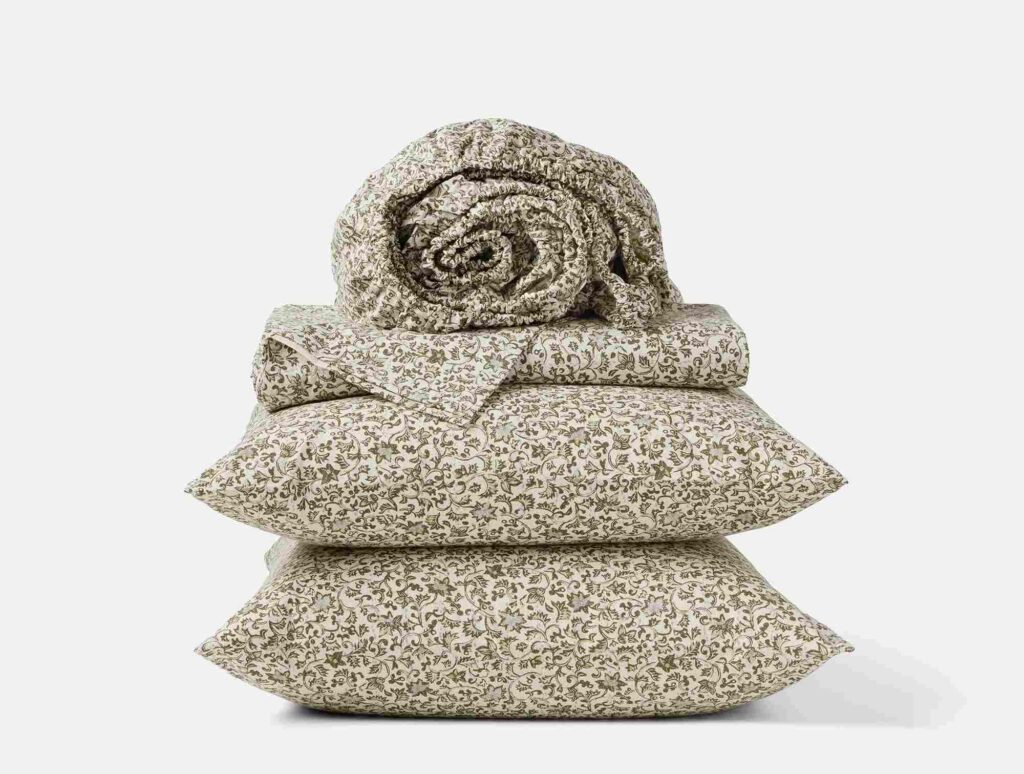
For a wider selection of natural bedding, Coyuchi is a great place to start. The brand offers everything from sheets and pillowcases to quilts and duvet covers, using materials including organic cotton, organic linen, organic latex, wool, and other responsibly sourced natural fibers. I chose Coyuchi because it combines natural materials with certifications such as GOTS, GOLS, and Fair Trade Certified.
Naturepedic: Bedding Beyond the Sheets
If you’re ready to rethink more than just your sheets, Naturepedic is one of my top recommendations. The brand offers mattresses, bedding, pillows, and furniture made with materials such as organic cotton and latex, and it holds a ton of certifications:
- GOTS (Global Organic Textile Standard—their whole factory is certified GOTS!)
- GOLS (Global Organic Latex Standard)
- EWG verified
- Made Safe (extremely strict)
- FSC (Forest Stewardship Council)
- GREENGUARD Gold
- Rainforest Alliance
- Carbon Neutral
- 1% For the Planet.
It’s the best of the best (after Aizome), particularly because of the certifications supporting its materials and manufacturing practices.
Pact: A More Accessible Organic Cotton Option
You know I love Pact’s clothing options, and their bedding is just as good. The bedding collection includes sheets, pillowcases, shams, quilts, and duvet covers made from organic cotton, along with certifications such as GOTS and Fair Trade Certified.
Pact is the best choice if you want natural bedding with meaningful certifications across a range of everyday essentials.
You Don’t Have to Replace Everything at Once
I know I say this all the time, but remember that you don’t have to replace everything on your bed all at once. Start with the bedding you spend the most time touching.
Replace polyester sheets first if that’s what fits your budget. Then consider pillowcases, blankets, duvet covers, and eventually your mattress.
Focus on progress rather than trying to create a “perfect” bedroom overnight.
4 Other Ways to Sleep Cooler
Swapping out synthetic sheets can make your bed more comfortable, but your sheets aren’t the only factor affecting how hot you sleep. A few simple changes to your bedroom, bedding layers, and nighttime routine can help you stay cooler and more comfortable throughout the night.
- Keep your bedroom temperature comfortable.
- Choose breathable pajamas.
- Don’t pile on layers if you’re already a hot sleeper.
- Wash bedding regularly.
Remember that sheets are only one part of your overall sleep environment.
Make Your Bed a Cooler, More Comfortable Place to Sleep
If you’re constantly waking up hot or sweaty, your sheets may be worth a closer look. While synthetic bedding isn’t necessarily the sole cause of nighttime sweating, choosing breathable, natural-fiber bedding can help create a more comfortable sleep environment.
A cooler night’s sleep might be as simple as changing what’s between you and the mattress.

+ show Comments
- Hide Comments