

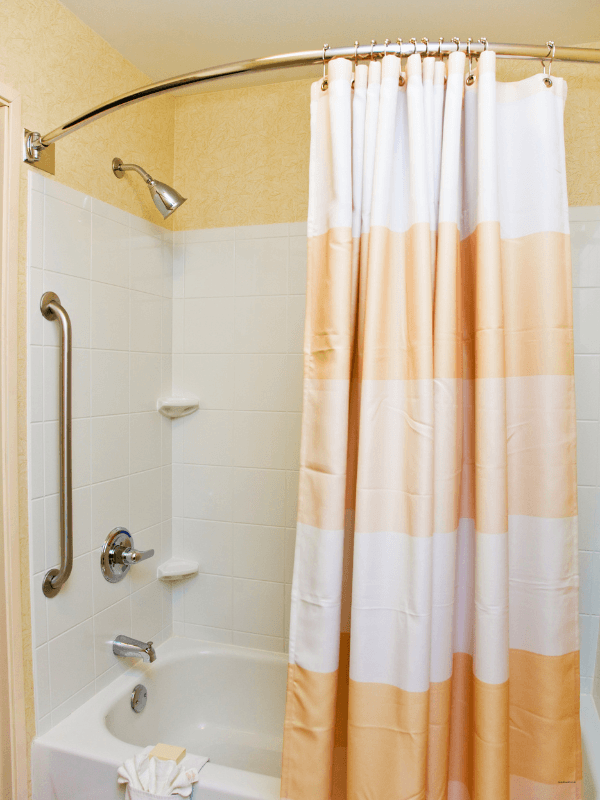


You know that unmistakable smell that hits you when you pull a brand-new shower curtain out of the package? It smells a little like plastic, a little like chemicals, and definitely not like something you want hanging in your bathroom.
It’s easy to dismiss it as the normal “new product smell,” but that odor can actually be a sign that chemicals are being released from the material into the air.
Many conventional shower curtains and liners are made from PVC, or polyvinyl chloride, a type of plastic that can contain additives such as plasticizers and release volatile organic compounds (VOCs).
And considering your shower is one of the warmest and most humid spaces in your home, it’s worth taking a closer look at what you’re hanging just a few feet from your face and choosing a non-toxic shower curtain and liner instead.
So, what’s behind that new shower curtain smell, and should you avoid PVC shower curtains altogether?
What Is PVC?
PVC stands for polyvinyl chloride, a type of plastic that’s widely used in everything from pipes and flooring to packaging and consumer products. It’s naturally rigid, but manufacturers can add plasticizers and other additives to make it softer and more flexible, which is why it’s used in shower curtains and liners.
PVC is popular because it’s durable, waterproof, inexpensive, and easy to manufacture. Those qualities make it seem like an obvious choice when you want something that can withstand constant moisture without absorbing water.
Why Are PVC Shower Curtains a Concern?
Flexible PVC products can contain additives such as plasticizers, and PVC shower curtains can also release VOCs into the air. Since your shower curtain hangs in a small, warm, humid space, it’s worth understanding what you’re bringing into your bathroom.
Phthalates and Plasticizers
To make naturally rigid PVC soft and flexible enough for products like shower curtains, manufacturers may add plasticizers. Phthalates are a group of chemicals commonly used for this purpose.
Some phthalates have been linked to potential hormone and reproductive health concerns, which is one reason many people choose to limit their exposure to them.
VOCs and Off-Gassing
Volatile organic compounds (VOCs) are chemicals that can evaporate into the air at room temperature. When a new PVC shower curtain has a strong plastic or chemical odor, you’re noticing compounds being released from the product.
Research has found that PVC shower curtains can emit VOCs, with some emissions continuing after the curtain is removed from its packaging. The smell itself doesn’t tell you exactly which chemicals are present or how hazardous they are, but it’s a good reminder that the product isn’t harmless.
Your Bathroom Is a Particularly Interesting Place for Off-Gassing
Your bathroom isn’t exactly the ideal environment for minimizing exposure to chemicals released from household products. Warmth, humidity, and limited ventilation can make odors more noticeable and can affect how quickly certain compounds are released into the surrounding air.
When you’re taking a hot shower, the temperature and humidity rise, which can increase the release of some VOCs from materials in the space.
And because bathrooms are often smaller, enclosed rooms, those compounds have less air to disperse into, especially if you don’t have a strong exhaust fan or an open window.
What Is That “New Shower Curtain Smell”?
That strong plastic or chemical odor you notice when you first unwrap a shower curtain isn’t necessarily the PVC itself.
You’re likely smelling volatile compounds released by the curtain and the additives used in its manufacture. This process is why a new PVC shower curtain can make your entire bathroom smell like plastic.
The smell may become less noticeable over time as some of these compounds dissipate, but that doesn’t mean the shower curtain has stopped releasing chemicals altogether.
What Should You Look for Instead?
If you’re ready to replace a PVC shower curtain, choose materials that avoid some of the concerns associated with conventional vinyl curtains and look for brands that are transparent about what goes into their products.
- PVC-free materials: Start by looking for toxin-free shower curtains and liners specifically labeled PVC-free.
- Clear material information: Choose brands that tell you exactly what their curtains and liners are made from rather than relying solely on vague claims like “eco-friendly” or “non-toxic.”
- Fewer unnecessary additives: Consider products that avoid potentially concerning additives such as plasticizers, coatings, fragrances, and other unnecessary treatments.
- Fabric options: Cotton, linen, and other fabric shower curtains can be alternatives to traditional plastic curtains. Just remember to look at how the fabric is treated and finished, too.
- No added fragrance: There’s no reason your shower curtain needs to smell like “fresh linen” or anything else. Skipping fragranced products can help you avoid another unnecessary source of chemicals.
What About PEVA, EVA, Polyester, Cotton, and Other Alternatives?
PEVA, EVA, polyester, and cotton are some of the most common alternatives you’ll see when shopping for a shower curtain or liner. But “PVC-free” doesn’t automatically mean a product is completely free of chemicals of concern, and each material has its own considerations.
PEVA and EVA, for example, are vinyl alternatives often used for waterproof liners, while polyester and cotton are fabric options that can be coated or finished.
Rather than assuming one material is always the best choice, look at the entire product, including its treatments, coatings, dyes, and manufacturing information, and choose an option that aligns with your priorities.
Switch to a Non-Toxic Shower Curtain
If you’re ready to replace your PVC shower curtain or liner, there are several non-toxic shower curtain options to help you switch without sacrificing practicality.
Here are my recommendations based on their materials and how they perform in a moisture-heavy bathroom:
- Natural fiber shower liners: Linen, cotton, and hemp are the most natural options. They do require a little more maintenance, including regular washing and allowing the liner to air-dry to help prevent mold.
- PEVA/EVA shower liners: These are a practical middle ground if you want to avoid traditional PVC. They’re synthetic, but the recommended options are chlorine-free, PVC-free, and don’t rely on phthalates for flexibility.
- OEKO-TEX 100 polyester liners: If washing a natural-fiber liner feels like too much work, polyester can be a more convenient alternative. Look for options with OEKO-TEX 100 certification.
- Organic cotton, linen, and hemp shower curtains: For those who want to skip plastic altogether, look for non-toxic shower curtains made from natural fibers with no vinyl, plastic, or PVC.
You Don’t Have to Live With the “New Shower Curtain” Smell
A shower curtain might seem like a small detail in your bathroom, but you interact with it regularly, and conventional PVC curtains can introduce unnecessary chemicals into your indoor environment. That strong “new shower curtain” smell isn’t something you need to put up with until it fades.
Swapping a PVC or vinyl shower curtain for a thoughtfully chosen non-toxic shower curtain can be a simple place to start.
If you’re ready to make the switch, shop the bathware options I’ve already vetted.

+ show Comments
- Hide Comments