



If you’ve ever tried switching to a clean mascara, you probably noticed that some formulas are beautiful and some are gone by lunchtime.
Mascara is one of the hardest products in clean beauty to formulate well, and the reason is chemistry.
But there are clean mascaras out there I’ve personally tried that accentuate the eyes and last all day long.
Why Traditional Mascara Works So Well
Traditional mascaras rely heavily on ingredients designed to create dramatic lashes and long wear, including:
- Synthetic film-forming polymers
- Plastic fibers are used for volume
- Silicone coatings
- Petroleum-derived waxes
- Sometimes even PFAS — also known as “forever chemicals.”
When clean brands remove these ingredients, they have to rebuild the entire formula using different systems. And that’s why clean mascaras often behave very differently from conventional ones.
After reviewing hundreds of formulas and testing many of them myself, I’ve organized clean mascaras into four categories.
Understanding these categories can help you find the clean mascara that actually works for your lashes.
A Quick Note About PFAS in Mascara
Before we get into the categories, it’s worth addressing PFAS in cosmetics.
PFAS are a class of chemicals often used to make products:
- Waterproof
- Long-wearing
- Resistant to smudging
Everything we hope mascara to be. PFAS can help mascara formulas resist humidity, sweat, and tears. It makes sense why traditional mascara companies want to use them in their products.
The problem is that PFAS are extremely persistent in the environment and are often called “forever chemicals” because they don’t break down easily or sometimes at all.
Several studies have found fluorinated compounds in cosmetics, even when they aren’t listed on the label.
That doesn’t mean every conventional mascara contains PFAS, but it’s one of the reasons many clean brands have moved away from using them.
Instead, they use alternative systems built around waxes, natural film formers, and plant-based ingredients. Those are the ones I’m going to talk about.
The 4 Types of Clean Mascara
Once you start looking closely at formulas, most clean mascaras fall into one of four categories. Each category prioritizes something slightly different, so let’s break it down to find the best one for you.
1. The Cleanest Botanical Mascaras
These formulas rely almost entirely on plant-based ingredients. You’ll typically see ingredients like:
- Plant waxes (carnauba, rice bran, berry wax)
- Plant oils (castor oil, jojoba oil)
- Mineral pigments like iron oxides
- Botanical film formers like acacia gum
Because they avoid synthetic polymers, these mascaras tend to create a softer, more natural lash look.
They’re often great for:
- Sensitive eyes
- Everyday makeup
- People who want the simplest ingredient lists possible
The trade-off is that these formulas are usually water-resistant rather than waterproof, so they may require a quick touch-up during the day. But the good news is that they wash off easily at night!
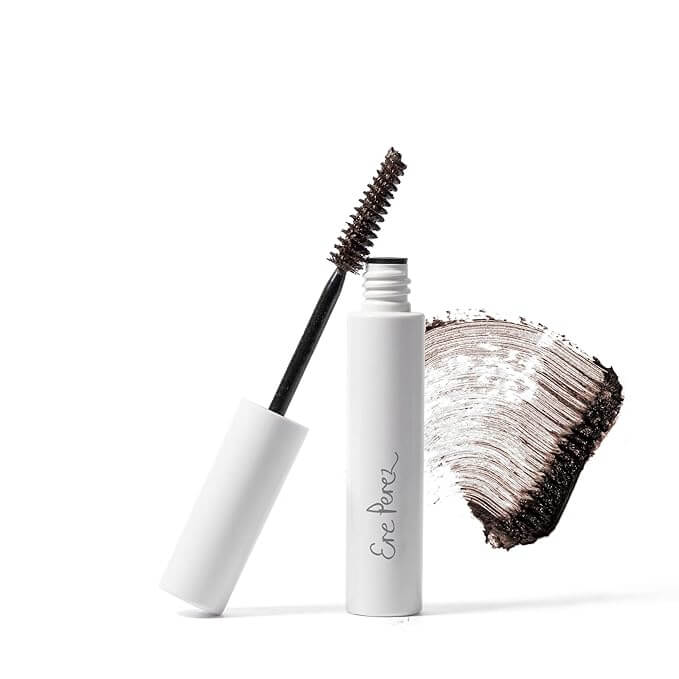
My Top Pick: Ere Perez Almond Oil Mascara
2. Lash Lengthening Formulas
Lengthening mascaras focus on definition and separation rather than dramatic thickness. These formulas often rely on:
- Lightweight wax blends
- Flexible film-forming ingredients
- Conditioning oils that help coat each lash evenly
The result is a mascara that extends the appearance of lashes while keeping them separated and defined.
These tend to work best for people who:
- Already have thicker lashes
- Prefer a lighter, defined look
- Want minimal clumping
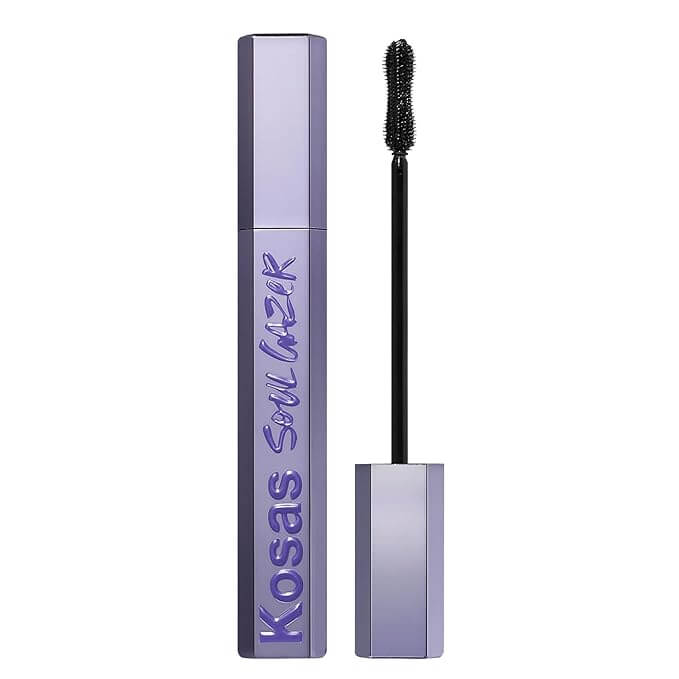
My Top Pick: KOSAS Soulgazer
3. Volumizing Mascaras
Volumizing mascaras focus on building thickness and fullness. To accomplish that, formulators usually rely on carefully balanced wax systems.
A strong volumizing formula might include a blend of waxes such as:
- Carnauba wax
- Rice bran wax
- Beeswax or berry wax
Using multiple waxes helps create structure without making the formula brittle. That balance is important because waxes that are too hard can cause flaking, and waxes that are too soft can lead to smudging.
These formulas also aren’t ideal for oily skin, heat, or humidity due to the wax melt. But when the wax architecture is done well, the result is fuller lashes without heavy clumping.
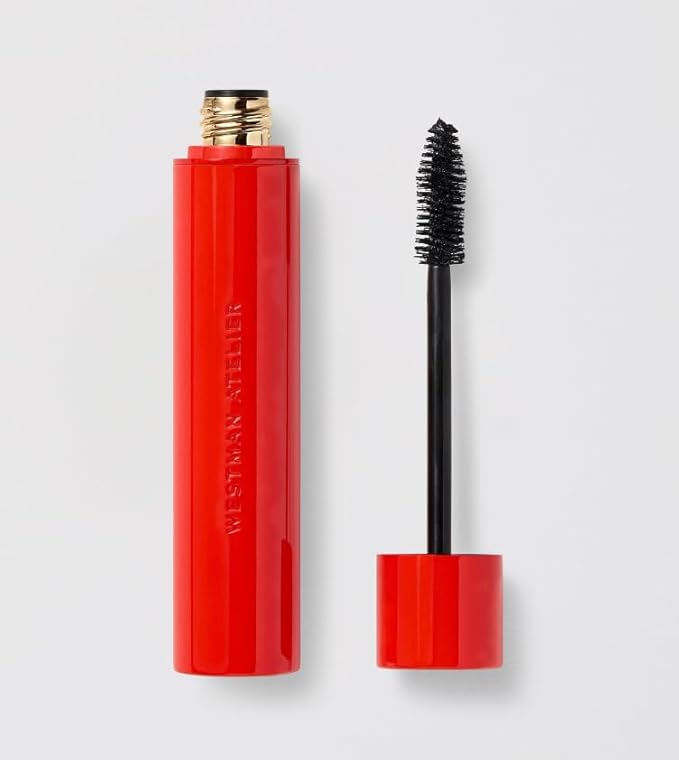
My Top Pick: Westman Atelier Eye Want You
4. Dramatic Lash Formulas (That Use Liquid Plastics)
Some mascaras achieve their dramatic performance by using synthetic film-forming polymers. These ingredients are sometimes described as liquid plastics because they create flexible polymer films around each lash.
These polymers are extremely effective at:
- Preventing smudging
- Holding curl
- Resisting humidity
- Creating dramatic volume
Many of these polymers are considered low-risk to human health. However, some people choose to avoid them because they are synthetic polymers that are not biodegradable. They are still PFAS-free, though.
By using these clean mascaras, you’ll get the most dramatic, longest-lasting lashes, but it could come with an ingredient trade-off.
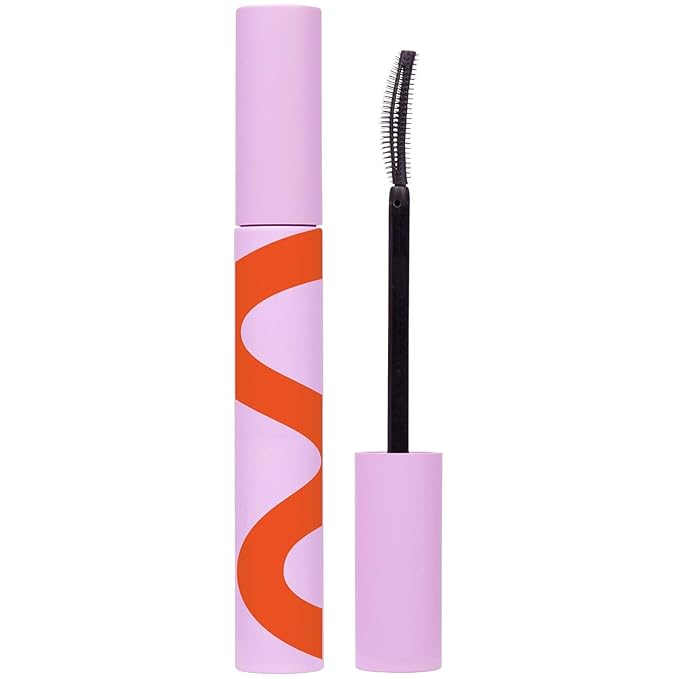
My Top Pick: Tower 28 Make Waves Mascara
Why Clean Mascara Performance Varies So Much
When people say clean mascara “doesn’t work,” it’s usually because the formula is missing one of the systems that make mascara perform.
A great mascara usually needs:
- A balanced wax system
- A film-forming ingredient
- A stable pigment suspension
- Conditioning ingredients that keep lashes flexible
When one of these elements is missing, you’re more likely to see issues like flaking, smudging, clumping, and uneven application.
Choosing a New Clean Mascara
Mascara is one of the few beauty categories where ingredient purity and performance don’t agree.
Some formulas prioritize ultra-clean botanical ingredients. Others use carefully selected synthetics to deliver dramatic wear and longevity.
Understanding the difference between these categories makes it much easier to choose the clean mascara that works best for you and aligns with your toxin-free lifestyle.
If you want to explore the mascaras that meet my ingredient standards in each of these categories, you can find them in the Mascara section of my Toxin Free-ish Cosmetics Shopping Guide.
Once you understand how mascara formulas actually work, finding the right one becomes a whole lot easier.
FAQs About Clean Mascara
Look for mascaras with plant-based waxes, natural pigments, and safer preservatives. Brands in this space typically avoid ingredients such as parabens, phthalates, and synthetic fragrances.
Common ingredients to be cautious of include parabens, phthalates, formaldehyde-releasing preservatives (like DMDM hydantoin), coal tar dyes, PFAS, and synthetic fragrance. Some people also choose to avoid liquid plastics. Reading ingredient labels and opting for transparent brands can help you make safer choices.
Start by checking the ingredient list. If it contains known irritants or controversial preservatives, it may not be the best option. If your mascara causes irritation, redness, or watery eyes, it might not mean it’s toxic, but it may not be a good fit for you.
Many modern mascaras are now labeled “paraben-free,” especially within clean beauty brands. These formulas use alternative preservatives that are considered safer while still preventing bacterial growth. Always double-check the label or brand website to confirm, as formulations can vary.
Going without mascara can reduce your exposure to potential irritants and give your lashes a break from daily wear and removal. However, wearing mascara isn’t inherently unhealthy if you use a clean formula and practice good hygiene (like replacing it every 3 months). It ultimately comes down to personal preference and how your eyes tolerate it.

+ show Comments
- Hide Comments