




Shaving is one of those routines we don’t think twice about — a few swipes, rinse, done. But it’s also one of the more aggressive things we do to our skin regularly.
Freshly shaved skin is more permeable than intact skin, which means whatever’s in the product you just used has a better shot at soaking in.
Here’s my actual take, though: you probably don’t need a dedicated shaving product at all. I usually just use a bit of conditioner or a bar soap and call it a day.
But if you like having something made specifically for shaving, the format you choose matters. Let’s break down what’s actually in each one, and which non-toxic shaving cream, gel, and bar options are worth keeping in your shower.
Why Shaving Products Deserve a Second Look
Shaving products don’t get a pass just because they’re rinsed off. How long something sits on your skin AND what state your skin is in when it’s there matters.
Shaving is essentially controlled micro-abrasion. A blade drags across your skin, and however smooth the result, it leaves your skin more permeable than it was a few minutes earlier. That’s exactly when you want to be more careful about what you’re applying.
Most conventional plastic razors come with built-in “moisture strips” that often contain undisclosed fragrance, PEGs (ethoxylated ingredients), and preservatives that can release formaldehyde.
Add in synthetic colorants and aerosol propellants in some gel formulas, and you’ve got a product that’s touching your most absorbent skin with ingredients you’d probably avoid in other products.
Should You Skip Shaving Prep All Together?
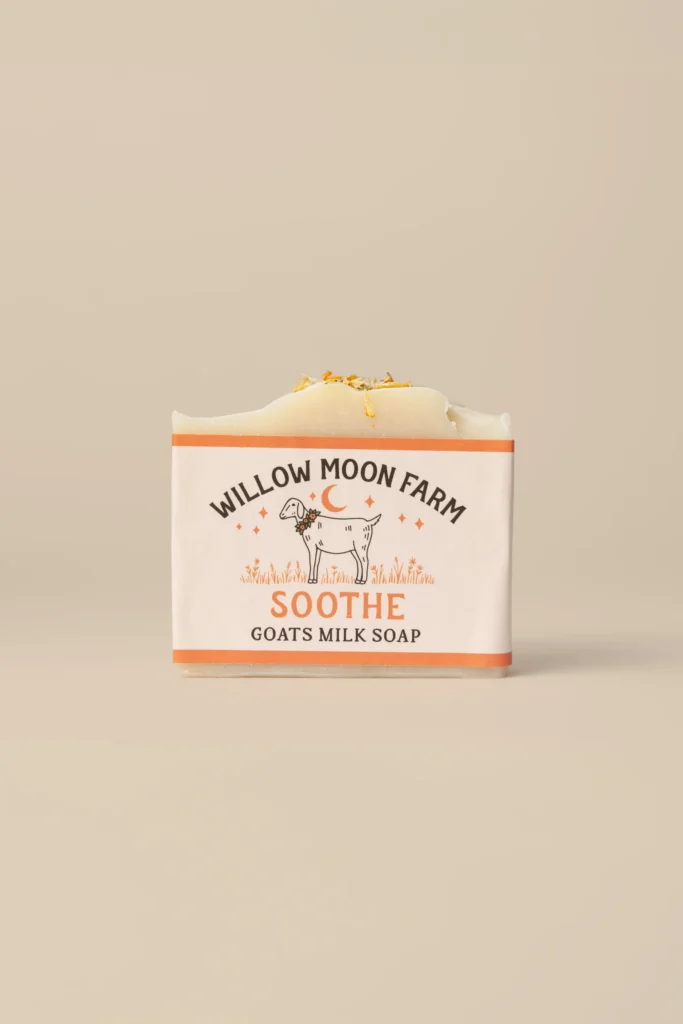
You know me—the simpler the better. I don’t even bother with shaving products anymore. Even though there are clean options out there, I’d rather simplify my routine and just use a bit of hair conditioner or a bar of gentle soap like the goat milk bar I use from Willow Moon Farm. That’s it.
A shaving product’s main job is to create slip so the razor glides instead of dragging, and to give you a little cushion against irritation. Conditioner and bar soap do both of those things perfectly well.
If you’re trying to simplify your routine or cut down on how many products you’re using overall, this is genuinely the easiest swap.
You don’t really need shaving products, but if you prefer something specifically made for shaving, you have non-toxic options.
Shave Bars: Minimal Packaging, Maximum Scrutiny
Shave bars are a solid, soap-based bar you work into a lather with water. Sometimes they’re dual-purpose as body soap, too.
I like shave bars because they typically come with little to no plastic packaging, travel well, and aren’t water-based, so they don’t need the same heavy-duty preservative systems that creams and gels do.
But “bar” doesn’t automatically mean “clean.” This is actually where I’ve had to rule out a product I otherwise liked: a cute, easy-to-use shaving bar from Kitsch that doesn’t disclose the fragrance ingredients or colorants used.
When a brand won’t tell you what’s creating the scent or the color, that’s a pass for me because I can’t vouch for something I can’t see the full list of.
So when you’re shopping for a shave bar, look for:
- A short, transparent ingredient list
- Fragrance that’s either disclosed or skipped entirely
- No synthetic dyes
My pick: the Badger Shave Bar — simple, effective, and nothing hiding in the ingredients.
Budget/in-store option: Dr. Bronner’s Organic Shaving Soap is easy to find and keeps things just as straightforward.
Are shave bars more environmentally friendly?
Generally, yes. Shave bars use far less packaging than gels or creams in plastic tubes and aerosol cans, and many come in minimal or compostable packaging. They also tend to last longer per use, so you’re buying less often.
The Trade-Off With Shave Creams
Shave creams are a whipped or lotion-like texture that spreads easily and leaves a visible layer to shave through. That extra cushion of moisture can feel great, especially if your skin runs dry or sensitive.
The trade-off is in the format itself. Because shave creams are water-based, they’re more vulnerable to bacteria and mold, which means they need a stronger preservative system to stay stable in your shower for months at a time.
That’s where PEGs and formaldehyde-releasing preservatives tend to sneak in because water-based formulas genuinely need something to keep them shelf-stable. Fragrance is common here too, often to mask the base ingredients.
Look for non-toxic shaving cream brands that:
- Use plant-based emollients for slip and moisture instead of synthetic conditioning agents,
- Are transparent about how they’re preserving the product
If you want that same moisturizing, cushiony feel without the preservative load, it’s worth remembering that a bar of goat milk soap — like the one I use from Willow Moon Farm — gives you a similar glide and hydration, minus the water-based formulation problem.
Shave Gels: Fun Texture, Fewer Reasons to Need It
Shave gels have a cool, slick texture that turns slightly foamy as you work it in. But gels are also usually the most processed format of the three.
Many come in aerosol cans, which means propellants in addition to whatever’s creating that gel texture in the first place. Synthetic foaming and thickening agents are common, and fragrance shows up here just as often as it does in creams.
Of the three formats, it’s the format I’d argue you need the least. A gel doesn’t shave you any closer than a bar of soap does; it just feels different on the way there.
If you love the ritual of a gel and don’t want to give it up, look for one that skips the aerosol can, discloses its fragrance, and keeps the ingredient list reasonably short.
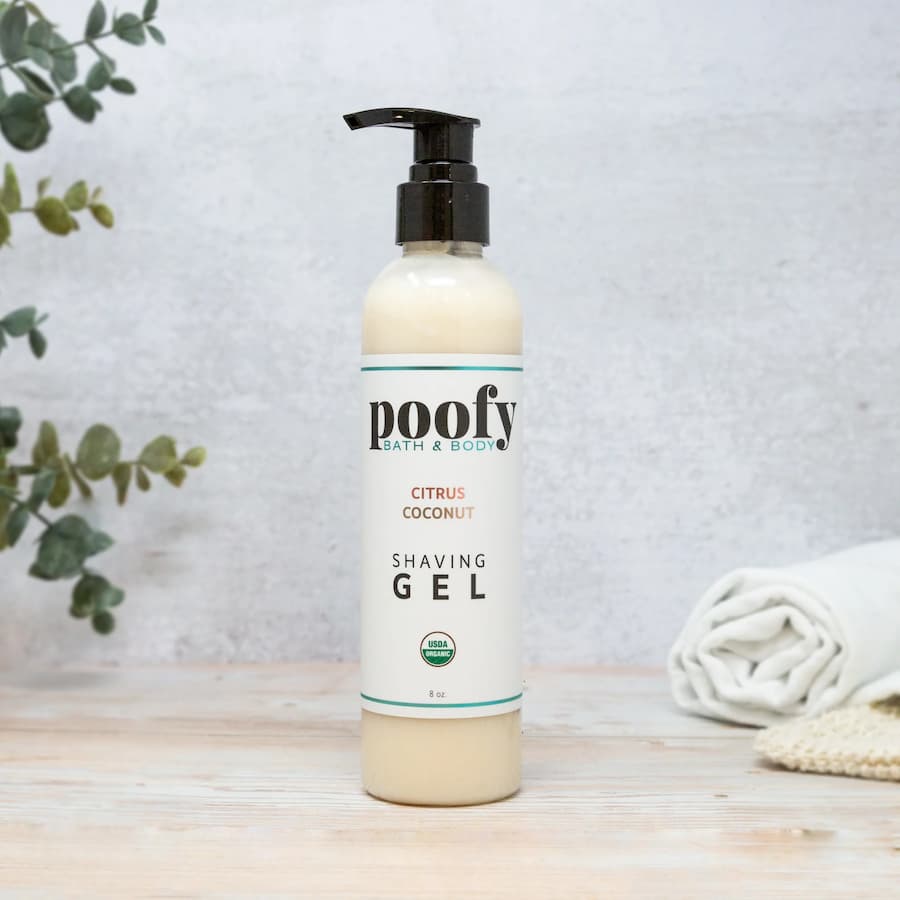
My pick: Poofy Organics Citrus Coconut Shaving Gel — a Canadian company that also makes a clean shaving bar if you decide you want to switch formats down the line. Use this link for 10% off your first order.
Is shave gel moisturizing?
It can be, but that slick texture often comes from foaming and thickening agents rather than genuinely moisturizing ingredients. If hydration is your main goal, a cream or a bar with nourishing oils will usually do more for your skin than a gel will.
So Which One Should You Choose?
Honestly, there’s no wrong answer here. It comes down to what fits your routine and your skin. But if you want a quick way to decide, here’s how I’d break it down:
Want the simplest routine possible? Skip the dedicated product entirely. A bit of conditioner or a gentle bar soap will do everything you need.
Want something low-waste and travel-friendly? Go with a shave bar. The Badger Shave Bar is my pick.
Want the moisture and cushion of a traditional cream? Be the most selective here, since this is the format where preservatives tend to hide. Or skip the water-based formula altogether and reach for a goat milk bar soap instead.
Love the ritual of a gel? Poofy Organics Citrus Coconut Gel gives you that familiar texture without the aerosol can or undisclosed fragrance.
Sensitive or easily irritated skin? Whichever format you land on, look for fragrance-free or simply-scented options first. Fewer ingredients generally means fewer chances for irritation, regardless of bar, cream, or gel.
The product matters less than most people think. A good razor and decent technique will get you a closer, more comfortable shave than any specific formula will.
What is the best shaving product for razor burn?
Look for something fragrance-free or minimally scented with simple, soothing ingredients because synthetic fragrance and harsh preservatives are common irritation triggers. A gentle, unscented bar soap or a clean cream with plant-based emollients is usually a safer bet than a foaming gel.
Can I shave with just soap?
Yep, that’s my go-to! A gentle bar soap or a bit of hair conditioner provides enough slip for the razor to glide smoothly, without needing a dedicated shaving product at all.
You Don’t Need a Cabinet Full of Shaving Products
You don’t need a five-step shaving routine or a drawer full of specialty products to shave cleaner. Most of the risk is in a handful of specific ingredients that are easy to swap out once you know what to look for.
If you want to keep things as simple as possible, a bit of conditioner or a gentle bar soap will do the job just fine. That’s genuinely what I reach for most days.
A couple of smart swaps go a long way.

+ show Comments
- Hide Comments